
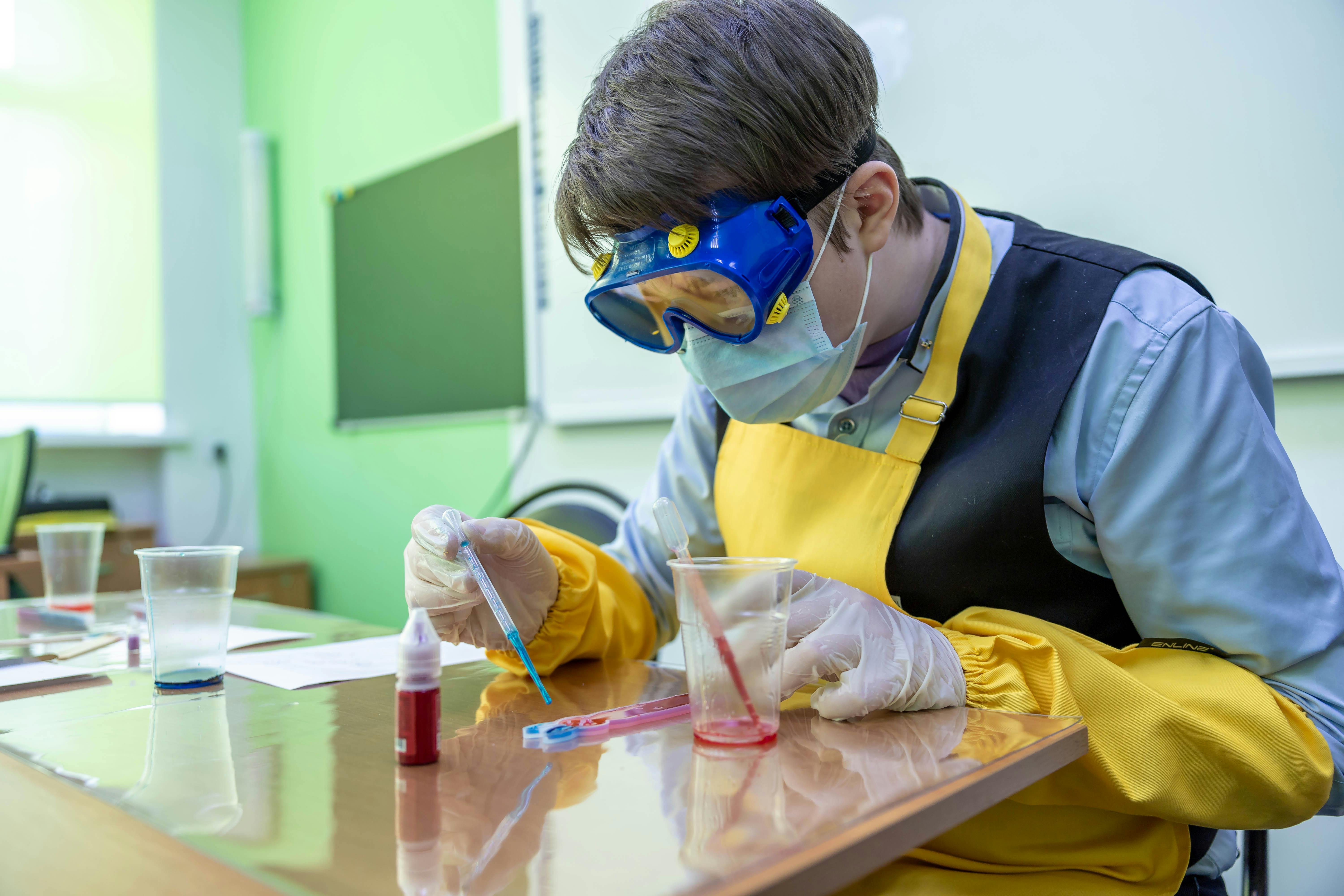
Chemistry Class 10 Notes — Complete Chapter-Wise Notes, Book PDF, Pairing Scheme and Past Papers (All Punjab Boards + FBISE)
Chemistry class 10 Pakistan ke students ke liye science ka aik ahem mazmoon hai — ye woh class hai jahan chemistry 9th class ki bunyad par aage barhti hai aur organic chemistry, industrial processes aur biochemistry jaise naye topics shuru hote hain. Is page par aap ko chemistry class 10 ke mukammal chapter-wise notes, book PDF, paper pattern, pairing scheme aur past papers ki guidance ek jagah milegi. Har link is site ke live page ki taraf jata hai — koi link andaze se nahi lagaya gaya.
Agar aap chemistry class 10 ki tayyari kar rahe hain to pehle apne board ka notes page chunen, phir neeche diye gaye chapter plan ke mutabiq parhen. Chemistry ratne ka mazmoon nahi hai: har concept ki misaal samajhna, chemical equation ko balance karne ki mashq karna aur processes ke steps yaad rakhna hi asal tayyari hai. Jo student sirf definitions rat leta hai aur equations aur numericals ki mashq nahi karta, woh paper me numerical aur process wale sawalat me marks khota hai.
Honest note: ye hub page original guidance hai jo maujooda textbook aur is site ke live notes par based hai. Ye official board paper nahi hai, aur paper pattern ki tafseel jahan third-party reproductions se li gayi hai, wahan saaf likha gaya hai — official wada nahi. Book edition ke bare me bhi aik zaroori baat neeche likhi hai. Final details apne teacher ya apne board se confirm karen.
Chemistry Class 10: 13 Chapters
10th class Chemistry ki maujooda book me kul 13 chapters hain, jin ki numbering Chapter 14 se Chapter 26 tak hai:
- States of Matter and Phase Changes — matter ki teen halaten, kinetic molecular theory, diffusion, evaporation, boiling aur sublimation.
- Stoichiometry — mole ka concept, Avogadro ka number, molar mass, empirical aur molecular formula, limiting reagent aur percentage yield.
- Electrochemistry — oxidation aur reduction, galvanic aur electrolytic cells, electrolysis, electroplating aur iron ka zang.
- Reaction Kinetics — rate of reaction, collision theory, activation energy aur catalyst ka kirdar.
- Salts — salts ki qismen: normal, acidic, basic, double aur hydrated salts; banane ke tareeqe: neutralisation, acid-metal, acid-carbonate aur precipitation.
- Nitrogen and Sulphur — Haber process se ammonia, Ostwald process se nitric acid aur Contact process se sulphuric acid; fertilisers aur acid rain.
- Water — hard water, pani ki safai ke tareeqe aur pani ki ahmiyat.
- Organic Chemistry — carbon ki catenation aur tetravalency, functional groups, homologous series aur isomerism.
- Hydrocarbons — saturated aur unsaturated compounds, addition aur substitution reactions, cracking aur fractional distillation.
- Monohydroxy Alkanes or Alcohols — hydroxyl group, fermentation aur alcohols ke istemal.
- Carboxylic Acids — carboxyl group, esterification aur carboxylic acids ke istemal.
- Biochemistry — carbohydrates, proteins, amino acids aur enzymes — zindagi ki chemistry.
- Polymers — monomer aur polymer, addition aur condensation polymerisation, aur thermoplastics.
Aik zaroori baat zehen me rakhen: internet par gardish karne wali pairing schemes purani 8-chapter wali numbering par based hain, jo maujooda 13-chapter wali book (Chapters 14 se 26) se match nahi kartin. Apni jari ki gayi book ke chapter titles aur tartib se is list ko zaroor mila len — agar farq nikle to apni book ko tarjeeh den, aur purani pairing par bharosa kar ke koi chapter na chhoren.
Har chapter ke liye chaar cheezen tayyar karen: chapter ka khulasa, ahem definitions, chemical equations aur processes, aur short aur long questions. Equations ko sirf parhen nahi — khud balance karne ki mashq karen, kyunke paper me balanced equation likhne ke marks hote hain. Haber, Ostwald aur Contact process ke steps haath se likhne ki mashq karen — ye teen processes har saal poochhe jate hain.
Chemistry Class 10 Notes PDF (Full Book)
Class 10 Chemistry ke full-book notes ki PDF yahan se download karen:
Download the complete 10th class Chemistry notes PDF (43 pages)
Is PDF me 13 chapters ke summaries, key definitions, important short questions, long questions aur practice MCQs shamil hain. Ye PDF Punjab ke students ke liye hai — Lahore, Gujranwala, Faisalabad, Bahawalpur, Multan, Rawalpindi, Sargodha, DG Khan aur Sahiwal. FBISE ke students ke liye NBF Grade 10 book ke mutabiq aik alag PDF hai, jis ka link FBISE ke notes page par diya gaya hai.
Chemistry Class 10 Notes — Apne Board ke Mutabiq
Neeche har board ka chemistry class 10 notes page diya gaya hai. Apna board chunen — har page par us board ke paper pattern, past papers aur chapter-wise study plan ke sath full-book notes ka link hai:
- 10th Class Chemistry Notes Lahore Board
- 10th Class Chemistry Notes Gujranwala Board
- 10th Class Chemistry Notes Faisalabad Board
- 10th Class Chemistry Notes Bahawalpur Board
- 10th Class Chemistry Notes Multan Board
- 10th Class Chemistry Notes Rawalpindi Board
- 10th Class Chemistry Notes Sargodha Board
- 10th Class Chemistry Notes DG Khan Board
- 10th Class Chemistry Notes Sahiwal Board
- 10th Class Chemistry Notes FBISE Board
Punjab ke nau boards (Lahore, Gujranwala, Faisalabad, Bahawalpur, Multan, Rawalpindi, Sargodha, DG Khan, Sahiwal) ke liye PECTAA ki assessment scheme yaksan lagoo hoti hai — koi board-only pairing scheme nahi hai. Federal Board apni NBF book aur apni scheme follow karta hai: FBISE ke notes ke liye aik alag FBISE Chemistry PDF tayyar ki gayi hai — us ka link FBISE ke page par hai. Karachi, Quetta, Peshawar aur AJK ke 10th class Chemistry companions abhi publish nahi hue — jese hi wo live honge, is hub me un ke links shamil kar diye jayenge. Apna board chunen, kisi aur board ka page na kholen.
Chemistry Class 10 Paper Pattern
Paper pattern har board ka apna hota hai. Punjab boards ke liye companions me chhapi gayi aam taqseem ye hai: theory paper kul 60 marks ka hota hai — 12 marks ke MCQs, 30 marks ke short questions aur 18 marks ke long questions — aur is ke sath 15 marks ka practical, kul total 75 marks. Ye taqseem third-party reproductions se li gayi hai, officially confirm nahi hui — ise rehnuma samjhen, official wada nahi. Final taqseem apne board ki jari ki gayi scheme se confirm karen.
Do ikhtilaf imandari se yahan darj kiye jate hain: aik source practical ko 30 marks batata hai, jo 60 marks ke theory total ke sath fit nahi betha — is liye use ghalti mana gaya hai. Aik aur source mukhtasar sawalat 34 aur tafseeli 16 batata hai, jo mil kar 62 bante hain, 60 nahi — wo bhi ghalti mana gaya hai; aam hisab 30 + 18 = 60 hai.
FBISE ke students apne board ke notes page se pattern check karen, kyunke FBISE ki scheme Punjab se mukhtalif hai. FBISE ke liye is hub me koi marks figure nahi chhapi gayi, kyunke sources me farq hai — FBISE ke notes page par tafseel di gayi hai aur taaza model papers fbise.edu.pk par check karen. Practical ki tayyari ko halka na len: jahan practical marks hain, wahan tajurba karne aur reading lene ki mashq paper se pehle zaroor karen.
Pairing Scheme aur Guess Papers
Pairing scheme batati hai ke paper ke har hisse se kitne sawalat aayenge aur kin chapters se aayenge. Pairing scheme ko samajhne ke liye pehle ye page parhen:
Internet par chemistry ki kai pairing schemes purani ya ghalat hain — sirf maujooda book ke 13 chapters (14 se 26) par bharosa karen. Purani 8-chapter wali numbering par based pairing schemes maujooda book se match nahi kartin, is liye un par tayyari na banayen.
10th class Chemistry ke guess papers is waqt live nahi hain — jese hi kisi board ka guess paper publish hoga, is hub me us ka link shamil kar diya jayega. Guess paper aik andaza hai, guarantee nahi — is se ahem topics ka andaza lagayen, lekin poori book ke chapters parhen baghair paper me na jayen.
Chemistry Class 10 ki Tayyari Kaise Karen
Tayyari ka behtareen tareeqa ye hai:
- Pehle concept samjhen, phir definition yaad karen. Har chapter ka markazi idea kisi misaal se samjhen — jese namak ka pani me ghulna solution ke liye, ya zang lagna electrochemistry ke liye.
- Numericals aur stoichiometry rozana hal karen. Mole, molar mass, percentage yield aur limiting reagent ke sawalat sirf parhne se yaad nahi rehte — har numerical khud hal karen, formula likhen, phir step by step hisab karen, aur aakhir me unit check karen.
- Processes haath se likhen. Haber, Ostwald aur Contact process ke steps aur conditions haath se likhne ki mashq karen — in ke steps exam me har saal poochhe jate hain.
- Organic families ko aik sath parhen. Hydrocarbons, alcohols aur carboxylic acids ke functional groups aur aam reactions aik sath yaad karen — aik family samajhne se doosri asan ho jati hai.
- Past papers se test len. Jab chapters mukammal ho jayen to past paper waqt dekh kar hal karen aur kamzor chapter dobara parhen. Purane sawalat ke jawab ratne ki koshish na karen — board topics aur sawal ki tarz dobara lata hai, wahi paper nahi.
Chemistry Class 10 — FAQs
Chemistry class 10 ki book me kitne chapters hain?
Maujooda book me kul 13 chapters hain, jin ki numbering Chapter 14 se Chapter 26 tak hai: States of Matter and Phase Changes; Stoichiometry; Electrochemistry; Reaction Kinetics; Salts; Nitrogen and Sulphur; Water; Organic Chemistry; Hydrocarbons; Monohydroxy Alkanes or Alcohols; Carboxylic Acids; Biochemistry; aur Polymers.
Chemistry class 10 ke notes PDF kahan se download karen?
Isi page par full-book notes PDF ka link diya gaya hai — 43 pages ki PDF, jis me 13 chapters ke summaries, definitions, short aur long questions aur MCQs hain.
Chemistry class 10 ka paper kitne marks ka hota hai?
Punjab boards ke liye aam taqseem kul 75 marks hai — theory 60 (12 MCQs + 30 short + 18 long) aur practical 15 — third-party reproductions se li gayi, officially confirm nahi hui. FBISE ke students apne board ka page check karen.
Kya purani pairing schemes se tayyari kar sakte hain?
Nahi — purani schemes 8-chapter wali numbering par based hain aur maujooda 13-chapter wali book se match nahi kartin. Sirf maujooda book ke chapters par tayyari banayen.
Guess papers se tayyari kaafi hai?
Nahi — guess paper sirf ahem topics ka andaza deta hai. Poori book ke chapters parhen, phir guess paper se apni tayyari ko check karen.