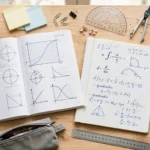
These AJK federal board fehm ul quran notes bring together all eight Surahs in the contents list in one place for revision. Each Surah is explained in simple, original words: its main theme, its central message, the important points to remember, short questions with answers, and one long question with a full answer. Use this page to revise the ideas, practise writing answers in your own words, and then check your understanding with the MCQ section at the end.
Important note: These are independent study and revision notes only. They are not official board material, not an official textbook, and not a guarantee of any exam question or result. They do not reproduce long passages of Quranic text. For the actual ayahs, always read from a printed Mushaf and study with your teacher’s guidance, because understanding, recitation and context matter more than memorising a summary.
Contents
Table of Contents
- How to Use These Notes
- Surah Al-Anbiya
- Surah Al-Hajj
- Surah Al-Muminun
- Surah An-Nur
- Surah Al-Furqan
- Surah Ash-Shuara
- Surah An-Naml
- Surah Al-Qasas
- MCQ Revision Section
- Revision Checklist
- Related Posts
How to Use These Notes
Read one Surah at a time. First learn its theme in your own words, then cover the answers and try the short questions aloud. Write the long answer once, in about a page, without copying the notes word for word. Finally, use the checklist to mark the Surahs you can explain confidently and the ones you need to revise again.
Surah Al-Anbiya
Summary and Theme
Surah Al-Anbiya, the 21st Surah, is named for the prophets whose stories it recalls. Its main theme is that the message of all prophets was one: worship Allah alone, live responsibly, and prepare for accountability. The Surah answers doubts about prophethood by pointing to earlier prophets, who were human messengers, and by showing that their communities faced similar tests.
Central Message
The central message is unity of purpose: the prophets did not bring different gods or different basic duties, and the Day of Judgement is real, so human life should be lived with faith, patience and good action.
Important Points
- Prophets were human beings chosen to deliver guidance, not angels or divine beings.
- Stories of prophets such as Ibrahim, Musa, Yunus and Ayyub illustrate patience, prayer and trust.
- Mockery and delay in punishment do not mean that accountability has been cancelled.
- Creation, night and day, and the order of the heavens are presented as signs for reflection.
Short Questions with Answers
Q1. Why is the Surah called Al-Anbiya? Because it discusses many prophets and their shared message.
Q2. What was the common message of the prophets? To worship Allah alone and to live a life of obedience, honesty and responsibility.
Q3. What lesson is drawn from the patience of the prophets? That a believer should remain steady in difficulty, keep praying, and trust that help and justice come in Allah’s time.
Long Question with Answer
Q. Explain how Surah Al-Anbiya strengthens belief in prophethood and accountability. The Surah links the present message to a long chain of prophets, so the claim is not new or isolated. It shows that earlier messengers were human, faced rejection, and were supported by Allah. This answers the objection that a prophet should be an angel or should bring instant punishment for opponents. It then turns to the natural world as a sign of purposeful creation, and to the Day of Judgement as the time when deeds will be weighed. Together, these points build a complete argument: guidance has been given, examples have been shown, and responsibility therefore rests on each person.
Surah Al-Hajj
Summary and Theme
Surah Al-Hajj, the 22nd Surah, takes its name from the pilgrimage. Its theme connects the outward rites of Hajj with inward devotion: the journey, sacrifice and gathering remind believers of equality, humility and the Day of Gathering. The Surah also discusses struggle for truth, the protection of places of worship, and respect for sacred duties.
Central Message
The central message is that worship must combine sincere intention with correct action, and that people of different backgrounds stand equal before Allah, so pride, exploitation and injustice have no place in religious life.
Important Points
- Hajj is a reminder of unity: pilgrims wear simple dress and perform the same rites.
- The Kaaba is presented as a centre established for worship of Allah alone.
- Sacrifice teaches gratitude and sharing, not mere ritual display.
- Defence against persecution is linked to protecting freedom of worship and moral order.
Short Questions with Answers
Q1. What does Hajj teach about equality? That rank, wealth and nationality do not matter in worship, because all pilgrims follow the same rites.
Q2. Why is intention important in sacrifice? Because the value of the act lies in devotion and obedience, not in show or personal gain.
Q3. How does the Surah link Hajj with the Hereafter? The great gathering of pilgrims reminds believers of the gathering on the Day of Judgement.
Long Question with Answer
Q. Discuss the spiritual and social lessons of Hajj as presented in Surah Al-Hajj. Spiritually, Hajj trains a person to leave comfort, follow set duties, and remember Allah with humility. Socially, it removes barriers of class and nation for a short period and teaches discipline, patience and sharing. The Surah also reminds readers that places of worship must be protected and that people should not be prevented from remembering Allah. When these lessons are carried home, they should appear as honesty, care for neighbours, and resistance to injustice.
Surah Al-Muminun
Summary and Theme
Surah Al-Muminun, the 23rd Surah, opens with a portrait of successful believers. Its theme is that faith is proved by character: humility in prayer, avoidance of useless talk, care for trusts, control of desires, and steadiness in worship. The Surah then recalls prophets and the creation of human life as signs that belief is reasonable and life is purposeful.
Central Message
The central message is that true success is not wealth or fame, but a faithful life that joins belief, worship and good conduct, leading to a lasting reward in the Hereafter.
Important Points
- Successful believers pray with humility and guard their prayers.
- They avoid idle and harmful speech and keep their trusts and promises.
- Human creation in stages is presented as a sign of a wise Creator.
- Prophets such as Nuh and Musa faced rejection, yet truth remained firm.
Short Questions with Answers
Q1. What marks a successful believer at the start of this Surah? Humility in prayer, avoidance of useless talk, giving charity, and keeping trusts.
Q2. Why is human creation mentioned? To remind readers that life has a Creator and a purpose, and that resurrection is not beyond Allah’s power.
Q3. What is the link between faith and character? Faith is shown in daily conduct, so worship without honesty, patience and care for others is incomplete.
Long Question with Answer
Q. Describe the qualities of successful believers in Surah Al-Muminun and explain why they matter. The Surah describes believers who pray with focus, turn away from vain talk, pay charity, guard chastity, keep trusts and promises, and protect their prayers. These qualities matter because they cover worship, speech, money, private conduct and public responsibility. A person who practises them is trustworthy in family, work and community life. The Surah also warns that this world is short, so a life built only on pleasure or wealth will not carry into the Hereafter, while a life built on faith and good action is presented as true success.
Surah An-Nur
Summary and Theme
Surah An-Nur, the 24th Surah, is named for light, which stands for divine guidance. Its theme is a pure, safe society: clear rules about chastity, modesty, privacy in homes, and the danger of spreading rumours. The Surah teaches that light guides individuals and communities out of suspicion, slander and moral confusion.
Central Message
The central message is that a healthy community protects honour, checks facts before speaking, guards privacy, and follows clear moral boundaries in public and private life.
Important Points
- Accusations against chaste people require strong proof; false accusation is a serious wrong.
- Believers should lower their gaze and dress modestly, and respect the privacy of homes.
- Rumours must not be repeated without evidence, especially when they harm innocent people.
- Guidance is compared to light that shows the right path clearly.
Short Questions with Answers
Q1. Why is the Surah called An-Nur? Because light is used as a symbol of Allah’s guidance, which removes darkness and confusion.
Q2. What should a believer do before repeating a rumour? Check the facts, avoid suspicion, and refuse to spread what harms others without proof.
Q3. How does modesty protect society? It reduces temptation, protects dignity, and keeps relationships within clear, respectful limits.
Long Question with Answer
Q. How does Surah An-Nur build a society based on purity and trust? The Surah sets rules in three areas: personal conduct, speech and privacy. Personal conduct is guided by modesty and restraint. Speech is guided by the rule that serious charges need witnesses and that slander is punished, which protects innocent people. Privacy is guided by permission before entering homes and by respect for family life. Together these rules reduce suspicion and gossip, protect honour, and allow trust to grow. The image of light ties the rules together: guidance is not meant to be hidden, but to be lived openly in homes, streets and public discussion.
Surah Al-Furqan
Summary and Theme
Surah Al-Furqan, the 25th Surah, is named for the criterion that separates truth from falsehood. Its theme is that revelation gives a clear standard for belief and conduct, while doubt, idolatry and blind imitation lead people astray. The Surah contrasts the qualities of true servants of Allah with the excuses of those who reject guidance.
Central Message
The central message is that truth is clear when a person is sincere, and that a believer should measure ideas and habits against revelation rather than against custom, wealth or public opinion.
Important Points
- The Quran is described as a criterion that distinguishes right from wrong.
- True servants walk humbly, speak peacefully, pray at night, and spend moderately.
- Rejection of prophets often came from pride and from following the crowd.
- Repentance, faith and good deeds can transform a person’s life.
Short Questions with Answers
Q1. What does the word Furqan mean in this context? A criterion or standard that separates truth from falsehood.
Q2. Name two qualities of the servants described in the Surah. Humility in walking and speech, and regular prayer combined with balanced spending.
Q3. Why did some people reject the prophets? Because of pride, attachment to old customs, and unwillingness to change their way of life.
Long Question with Answer
Q. Explain the qualities of true servants in Surah Al-Furqan and their value in daily life. The Surah presents servants who are humble rather than arrogant, who answer ignorance with peace, who spend nights in prayer, who avoid waste and miserliness, who do not harm others, and who repent when they fall short. These qualities are valuable because they shape every part of life: how a person talks, spends, treats family, and responds to insult. The Surah therefore treats faith not as a label, but as a pattern of behaviour that can be seen and tested in ordinary situations.
Surah Ash-Shuara
Summary and Theme
Surah Ash-Shuara, the 26th Surah, is named for poets, whose words are contrasted with revelation. Its theme is that prophets spoke truth, not poetry or magic, and that every community that rejected its messenger faced the consequences of its own choices. The Surah repeats stories of Musa, Ibrahim, Nuh, Hud, Salih, Lut and Shuayb with a shared pattern.
Central Message
The central message is that guidance is consistent across history, that powerful opponents cannot defeat truth, and that a messenger’s task is to warn clearly and patiently, not to force belief.
Important Points
- Each prophet called his people to worship Allah alone and to abandon injustice.
- Opponents used similar excuses: pride, wealth, custom and fear of change.
- Believers were often few or weak, yet truth survived.
- Poetry that misleads is different from revelation, which guides to moral action.
Short Questions with Answers
Q1. Why does the Surah repeat many prophet stories? To show that rejection of truth follows a pattern and that the outcome of arrogance is also repeated.
Q2. What did the prophets ask from their people? They asked for obedience to Allah and for justice, not for wealth, power or personal reward.
Q3. How is revelation different from poetry? Poetry can please or mislead by words alone, while revelation gives a moral message and a call to action.
Long Question with Answer
Q. What common pattern do the prophet stories in Surah Ash-Shuara teach? Each story begins with a messenger sent to a community that has turned to idolatry or injustice. The messenger speaks clearly and patiently, but leaders and many followers reject him because they fear losing power, wealth or tradition. A small group believes, and the wider community continues in wrongdoing until a crisis or punishment exposes the failure of its choices. The pattern teaches that history is a teacher: when a society repeats the same pride and injustice, it should expect the same kind of failure, while sincere belief and patience protect the individual even when the majority disagrees.
Surah An-Naml
Summary and Theme
Surah An-Naml, the 27th Surah, is named for the ants whose community is mentioned in the story of Sulayman. Its theme is knowledge, wisdom and gratitude: true knowledge leads to humility before Allah, while arrogance leads to denial. The Surah presents Sulayman, the Queen of Sheba, Musa and Salih as examples of leadership, guidance and moral choice.
Central Message
The central message is that power and knowledge are trusts: they should be used with justice, gratitude and respect for truth, not for pride or exploitation.
Important Points
- Sulayman understood the value of guidance and thanked Allah for wisdom and leadership.
- The Queen of Sheba investigated the message before accepting it, showing careful thinking.
- The ant story reminds readers that even small creatures have order and purpose.
- Signs in nature and history point to one Creator and to accountability.
Short Questions with Answers
Q1. Why is the Surah called An-Naml? Because it mentions the ants in the story of Sulayman and their organised community.
Q2. What did the Queen of Sheba do before accepting guidance? She examined the message and consulted her advisers instead of rejecting it at once.
Q3. How should knowledge be used? With gratitude, humility and justice, not for pride or for harming others.
Long Question with Answer
Q. What lessons about leadership and wisdom are taught in Surah An-Naml? Sulayman is shown as a leader who used knowledge and power with gratitude and care, rather than for display. His attention to the ant community shows concern for the weak and for order in creation. The Queen of Sheba models a thoughtful leader who checks evidence, seeks advice, and changes her position when truth becomes clear. Together, these stories teach that good leadership combines knowledge with humility, consultation with decision, and power with responsibility toward people and the natural world.
Surah Al-Qasas
Summary and Theme
Surah Al-Qasas, the 28th Surah, is named for stories, especially the detailed story of Musa. Its theme is that Allah protects truth and the oppressed, while pride and wealth cannot save the unjust. The Surah follows Musa from childhood, through his call, to his confrontation with Pharaoh, and contrasts him with Qarun, whose wealth led to arrogance.
Central Message
The central message is that Allah’s plan works through patience and trust, and that the oppressed should not lose hope, because power built on injustice is not lasting.
Important Points
- Musa was protected as a child, showing that Allah’s care can work in unexpected ways.
- Pharaoh’s power and Qarun’s wealth are contrasted with Musa’s patience and trust.
- The story teaches courage in speaking truth to a powerful ruler.
- Wealth is a test: gratitude and generosity protect a person, while pride destroys him.
Short Questions with Answers
Q1. Why is the Surah called Al-Qasas? Because it narrates detailed stories, above all the story of Musa.
Q2. What does Musa’s story teach about hope? That help can come in unexpected ways, so believers should remain patient and trust Allah in hardship.
Q3. What lesson is drawn from Qarun? That wealth without gratitude and justice leads to arrogance and loss.
Long Question with Answer
Q. Discuss the story of Musa in Surah Al-Qasas as a lesson in patience, courage and trust. Musa’s life moves from danger in childhood to exile, to a call to confront Pharaoh, and to leadership of his people. At each stage, the Surah shows fear turning into trust through prayer and obedience. His courage is not reckless: he speaks clearly, seeks help, and remains steady when Pharaoh threatens him. Qarun provides the opposite example, using wealth to claim superiority until his pride ends in loss. The contrast teaches students that true strength is moral, not material, and that patience in difficulty is part of following guidance.
MCQ Revision Section
Try each question before reading the answer. These MCQs test themes and lessons from these AJK federal board fehm ul quran notes, not memorised wording.
- 1. Surah Al-Anbiya is named for: (a) Pilgrimage (b) Prophets (c) Light (d) Stories — Answer: (b)
- 2. The common message of the prophets was to: (a) Seek wealth (b) Follow custom only (c) Worship Allah alone (d) Avoid prayer — Answer: (c)
- 3. Surah Al-Hajj links pilgrimage with: (a) Trade (b) Equality and the Day of Gathering (c) Poetry (d) Kingship — Answer: (b)
- 4. A successful believer in Surah Al-Muminun prays with: (a) Pride (b) Humility (c) Haste (d) Display — Answer: (b)
- 5. Surah An-Nur teaches that a serious accusation needs: (a) Rumour (b) Suspicion (c) Strong proof (d) Popular opinion — Answer: (c)
- 6. In Surah An-Nur, light symbolises: (a) Wealth (b) Guidance (c) Power (d) Poetry — Answer: (b)
- 7. Al-Furqan means: (a) A story (b) A journey (c) A criterion separating truth from falsehood (d) A song — Answer: (c)
- 8. True servants in Surah Al-Furqan are marked by: (a) Arrogance (b) Humility and balanced spending (c) Waste (d) Silence about truth — Answer: (b)
- 9. Surah Ash-Shuara repeats stories to show: (a) A new religion each time (b) A pattern in rejection of truth (c) The power of poetry (d) Trade routes — Answer: (b)
- 10. Prophets in Ash-Shuara asked their people for: (a) Wealth (b) Power (c) Obedience to Allah and justice (d) Land — Answer: (c)
- 11. Surah An-Naml is named for: (a) Ants (b) Bees (c) Birds (d) Camels — Answer: (a)
- 12. The Queen of Sheba is praised for: (a) Rejecting advice (b) Examining evidence before deciding (c) Seeking war (d) Hiding knowledge — Answer: (b)
- 13. Surah Al-Qasas mainly narrates the story of: (a) Yusuf (b) Musa (c) Yunus (d) Ayyub — Answer: (b)
- 14. Qarun is an example of: (a) Gratitude (b) Wealth leading to arrogance (c) Patience (d) Humility — Answer: (b)
- 15. Which Surah stresses modesty, privacy and checking rumours? (a) Al-Hajj (b) An-Nur (c) An-Naml (d) Al-Qasas — Answer: (b)
- 16. Which pair is in the correct order? (a) Al-Anbiya 21, Al-Hajj 22 (b) Al-Anbiya 22, Al-Hajj 21 (c) An-Nur 25, Al-Furqan 24 (d) An-Naml 28, Al-Qasas 27 — Answer: (a)
Revision Checklist
- Al-Anbiya: I can explain the shared message of the prophets.
- Al-Hajj: I can explain equality, sacrifice and intention in Hajj.
- Al-Muminun: I can list the qualities of successful believers.
- An-Nur: I can explain proof, privacy, modesty and rumours.
- Al-Furqan: I can explain the criterion and the qualities of true servants.
- Ash-Shuara: I can explain the repeated pattern in prophet stories.
- An-Naml: I can explain leadership, wisdom and gratitude.
- Al-Qasas: I can explain Musa’s patience and the lesson of Qarun.
- I can answer one long question for each Surah in my own words.
- I can score at least 13 out of 16 in the MCQ section without looking at the answers.
Related Posts
- Tarjuma-tul-Quran Notes for 2nd Year
- Tarjuma-tul-Quran 2nd Year Guess Paper 2027 — Important Questions
Remember: read the actual ayahs from the Mushaf with teacher guidance, revise these summaries in your own words, and use the checklist to plan your next revision session.