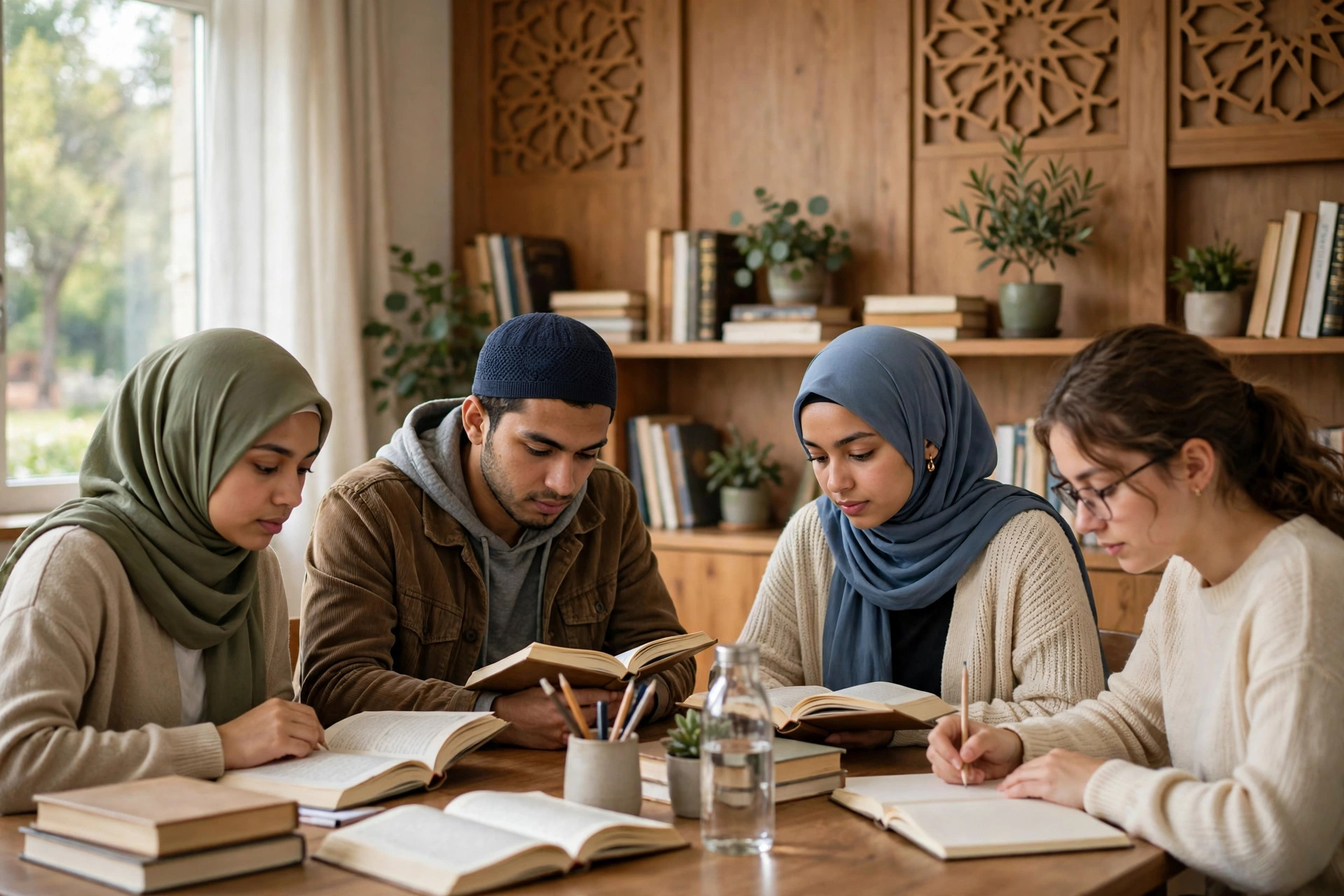
A true Muslim is not known only by a name, a dress, or the words he uses in public. He is known by his character. Islam teaches that faith must be visible in daily life: in how a person speaks, how he treats his parents, his neighbours, and strangers, how he earns his living, and how he behaves when no one is watching. For a college student, this is a practical lesson, not only a subject for an examination. A true Muslim tries to bring his beliefs and his behaviour together.
What Makes a Muslim True?
The word Islam itself carries the meaning of submission to God and peace. A Muslim is one who submits to the will of Allah and tries to live in peace with others. This submission is shown first in worship, but it does not end in the mosque. It continues in the classroom, at home, in the market, and on the road. A student who prays regularly but cheats in an examination, or who speaks politely to a teacher but rudely to a servant, has not yet understood the full meaning of his faith.
The Holy Qur’an gives a clear standard for human worth. It does not place one race, one nation, or one family above another. As translated from the Qur’an (49:13), “O mankind, indeed We have created you from male and female and made you peoples and tribes that you may know one another. Indeed, the most noble of you in the sight of Allah is the most righteous of you.” A true Muslim therefore judges people by their character and their deeds, not by their wealth, colour, or status.
Faith in Worship and in Character
Worship is the foundation of a Muslim’s life. Prayer five times a day, fasting in Ramadan, giving charity, and performing Hajj when able, all remind a believer of his duty to Allah. But Islam also insists that worship must change character. A prayer that does not stop a person from lying, backbiting, or harming others is incomplete in its purpose.
“Purity is half of faith.”
Hadith, Sahih Muslim
This short saying, attributed to the Prophet Muhammad (peace be upon him) and recorded in Sahih Muslim, shows how Islam joins outward cleanliness with inward purity. A true Muslim keeps his body, his clothes, his home, and his surroundings clean, and he also keeps his heart clean from hatred, pride, and dishonesty.
Learning is also a duty. The Prophet Muhammad (peace be upon him) is reported to have said, as recorded in Sahih al-Bukhari, “The best among you are those who learn the Qur’an and teach it.” A college student who studies sincerely, respects his teachers, and shares knowledge with others is following this teaching in a practical way. For more practice material, see this collection of English essays for college students, which covers several common essay topics in the same style.
Honesty, Kindness, and Self-Control
Three qualities mark a true Muslim more clearly than anything else: honesty, kindness, and self-control. Honesty means speaking the truth even when it is difficult, keeping promises, and being fair in business and in study. A shopkeeper who gives full measure, a student who writes his own work, and an employee who does not waste his employer’s time are all practising honesty.
Kindness means caring for others. The Prophet Muhammad (peace be upon him) taught, as recorded in Sahih al-Bukhari and Sahih Muslim, “None of you truly believes until he loves for his brother what he loves for himself.” A true Muslim is kind to his parents, gentle with children, helpful to the poor, and respectful to people of other faiths. He does not enjoy the pain of others, and he does not spread rumours or gossip.
Self-control is tested most in anger. The Prophet Muhammad (peace be upon him) said, as recorded in Sahih al-Bukhari, “The strong is not the one who overcomes people by wrestling; the strong is the one who controls himself while in anger.” A true Muslim does not lose his temper quickly, does not use abusive language, and does not take revenge for every insult. He forgives when he can, and he remains patient in difficulty. Patience in hard times is also the theme of the essay on hope and patience, Every Cloud Has a Silver Lining, which students often read alongside this essay.
A True Muslim in Society
A true Muslim is a useful member of society. He respects the law, pays his debts, protects public property, and works for the good of his community. He does not harm his neighbours, whether by noise, by litter, or by unkind words. He helps the sick, visits the lonely, and supports the needy, not to show off, but because he believes that serving people is a way of pleasing Allah.
In the same way, a true Muslim uses modern knowledge with responsibility. Science and technology are gifts, but they must serve human welfare and not harm it. Students can read the essay on the uses and abuses of science to see how this responsibility applies to inventions and discoveries in daily life.
Conclusion
In conclusion, a true Muslim is one whose faith, words, and actions agree with each other. He worships Allah sincerely, speaks the truth, treats people with kindness, controls his anger, and serves his society honestly. He does not claim perfection, because every human being makes mistakes, but he repents, corrects himself, and tries again. That constant effort to be better is the real sign of a true Muslim. Students who wish to practise more essay writing can browse more English essays for college students on this site.