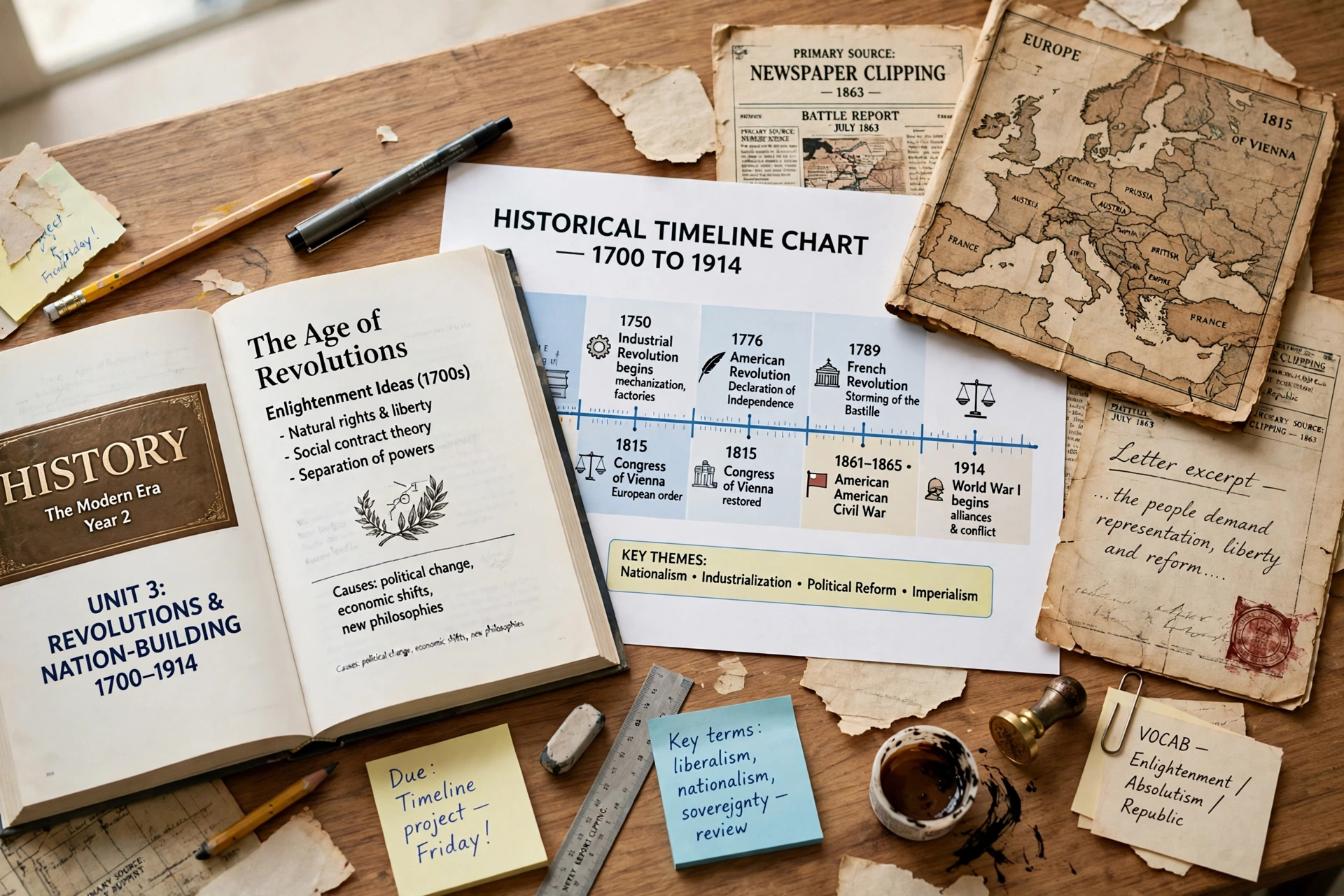
This history 2nd year guess paper 2027 guide gives you a focused revision plan for 2nd year History. The topics below are selected from the general trend of past papers from 2020 to 2026, such as repeated themes on the Pakistan Movement, constitutional developments, historical personalities and major events. Use them to revise smartly, not to skip your textbook.
Note: This is a revision guide based on trends, not a past-papers collection and not an official paper. It does not claim that any question is leaked or guaranteed to appear.
Table of Contents
Short Questions: Important Topics for History 2nd Year 2027
Revise each topic in two or three lines first: what happened, why it mattered, and what changed after it. That short-answer method works well for most short questions.
- War of Independence 1857: main causes and immediate results.
- Sir Syed Ahmad Khan and the Aligarh Movement: educational and political aims.
- Two-Nation Theory: its basis and why it gained support among Muslims.
- Lucknow Pact 1916: Hindu-Muslim cooperation and its importance.
- Khilafat Movement: causes, leadership and impact on the freedom struggle.
- Simon Commission: why it was boycotted and what followed.
- Nehru Report and Jinnah’s Fourteen Points: the main points of disagreement.
- Allahabad Address 1930: Allama Iqbal’s idea of a separate Muslim state.
- Round Table Conferences: main demands, discussions and outcomes.
- Pakistan Resolution 1940: key points and its importance for the Pakistan Movement.
- Cabinet Mission Plan and the 3rd June Plan: proposals and Muslim League’s response.
- Partition of 1947: early problems faced by Pakistan, including refugees and administrative setup.
- Objectives Resolution 1949: its main principles.
- Constitutions of 1956 and 1962: main features and a brief comparison.
- Constitution of 1973: federal and parliamentary features.
Long Questions: Important Topics for History 2nd Year 2027
For long questions, practise writing with an introduction, three or four clear points with examples, and a short conclusion. Dates, names and documents make your answer stronger, but only when you are sure of them.
- Causes and failure of the War of Independence 1857: political, economic, social and military causes, and why the uprising did not succeed.
- Role of Sir Syed Ahmad Khan: how education, the Aligarh Movement and his writings changed Muslim thinking after 1857.
- Pakistan Movement from 1940 to 1947: from the Pakistan Resolution to independence, including elections, negotiations and the final transfer of power.
- Constitutional developments from 1947 to 1973: why constitution-making took time, and how the 1956, 1962 and 1973 constitutions differed.
- Role of Quaid-i-Azam Muhammad Ali Jinnah: his leadership, constitutional approach and negotiations in the Pakistan Movement.
- Role of Allama Muhammad Iqbal: his poetry, political thought and the Allahabad Address in shaping the idea of Pakistan.
- Turning points in the Pakistan Movement: Lucknow Pact, Khilafat Movement, Fourteen Points, Pakistan Resolution and the Cabinet Mission Plan.
- Early challenges and consolidation of Pakistan: refugee settlement, constitution-making, provincial issues and the search for political stability.
MCQ Practice Topics: Pakistan Movement, Constitution and Personalities
Use these topics for quick self-testing. Cover the answer, recall the date or name, and then check it in your textbook.
- Pakistan Movement dates: Lucknow Pact, Allahabad Address, Pakistan Resolution and Independence Day.
- Constitutional documents: Objectives Resolution and the main features of the 1956, 1962 and 1973 constitutions.
- Historical personalities: Sir Syed Ahmad Khan, Allama Iqbal, Quaid-i-Azam and Liaquat Ali Khan, and their main contributions.
- Commissions and plans: Simon Commission, Cabinet Mission Plan and the 3rd June Plan.
- Major events: War of Independence 1857, Khilafat Movement and the Round Table Conferences.
- Political organisations: formation and aims of the Muslim League and the Congress in this period.
- Key terms: Two-Nation Theory, separate electorates, federal system and parliamentary system.
- Turning-point documents: Fourteen Points, Pakistan Resolution and the Objectives Resolution, and who presented each one.
How to Use This Guess Paper
- Start with the short questions, then move to the long questions on the same theme.
- Write each answer once in your own words instead of only reading it.
- Learn dates in pairs, for example the event and the document linked to it.
- Attempt the MCQ topics daily for ten minutes before a full revision session.
- Revise the weakest theme first, and leave one full day for textbook revision.
Textbook Revision: What to Revise First
Dates and documents to memorise
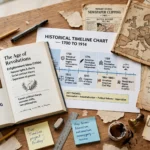
Make a one-page timeline from 1857 to 1973. Add the Lucknow Pact, the Fourteen Points, the Pakistan Resolution, the Objectives Resolution and the three constitutions. A timeline helps you answer both short questions and MCQs quickly.
Personalities and their contributions
For each personality, note one role, one major speech or document, and one lasting impact. Do not mix up similar events: for example, keep the Allahabad Address, the Pakistan Resolution and the Objectives Resolution as three separate points on your timeline.
Constitutional developments in simple steps
Revise constitutional history as a story: the need for a constitution after independence, the Objectives Resolution as a guide, the 1956 and 1962 experiments, and the 1973 settlement. Compare them on three points only: form of government, federal structure and Islamic provisions.
Related 2nd Year Guides
- 2nd Year Notes, Guess Papers, Pairing Schemes and Past Papers
- Commerce 2nd Year Guess Paper 2027: Important Questions
- 12th Class Paper Pattern 2027: Status Guide
Frequently Asked Questions
Is this history 2nd year guess paper 2027 official or guaranteed?
No. This is an original revision guide based on general trends in past papers from 2020 to 2026. It is not official, leaked or guaranteed, and your board paper may include other topics.
Which topics should I revise first for History 2nd year?
Start with the Pakistan Movement, constitutional developments and major personalities, because these themes appear again and again. Then revise the War of Independence 1857 and the early problems of Pakistan.
How can I prepare long questions in History effectively?
Use a simple structure: introduction, causes or background, main developments, results, and a conclusion. Add dates and names only where you are confident, and finish each answer with its historical importance.
Should I only study these important questions?
No. Use this list to prioritise revision, but read your full textbook chapters as well. A complete reading helps you answer unexpected short questions and MCQs, and it improves your long answers.
Revise steadily, practise writing, and check every date and document in your textbook before the exam. Good luck with your History preparation.

1 thought on “History 2nd Year Guess Paper 2027 — Important Questions”